Define the brief
We discuss the brand, audience, application and creative references. Include the intended launch date, estimated volume and budget context where you have them.
What should this smell like, and where will people meet it?
Three first directions, two rounds of refinement and testing in one agreed use. Before the first sample we agree what we're making and who'll manufacture it.
Covers the brief, three first samples, two rounds of refinement and a testing plan for the chosen use. Exact scope agreed in writing before we start.
For the creative work. Product testing, manufacture and extra formats run on their own timelines.
Concentrate, manufacture, packaging and installation are quoted on their own. Who owns the formula, and any exclusivity, goes in the agreement.
We discuss the brand, audience, application and creative references. Include the intended launch date, estimated volume and budget context where you have them.
What should this smell like, and where will people meet it?
The brief becomes a fragrance direction to evaluate. Compare it with the agreed goals and identify what feels right before deciding what needs to change.
Which qualities should lead the composition?
The most useful feedback is specific. "Softer opening, less sweet, keep the dry wood" gives us a next sample. "Make it more premium" doesn't.
What is essential, and what is still unresolved?
Creative selection is one part of a launch. Application evaluation, production responsibilities and the agreed handoff also need to be clear for the chosen product format.
What needs to be confirmed before the project moves into production?
Wear it, burn it or leave it in the room, whichever it's for. The first ten minutes are only the opening.
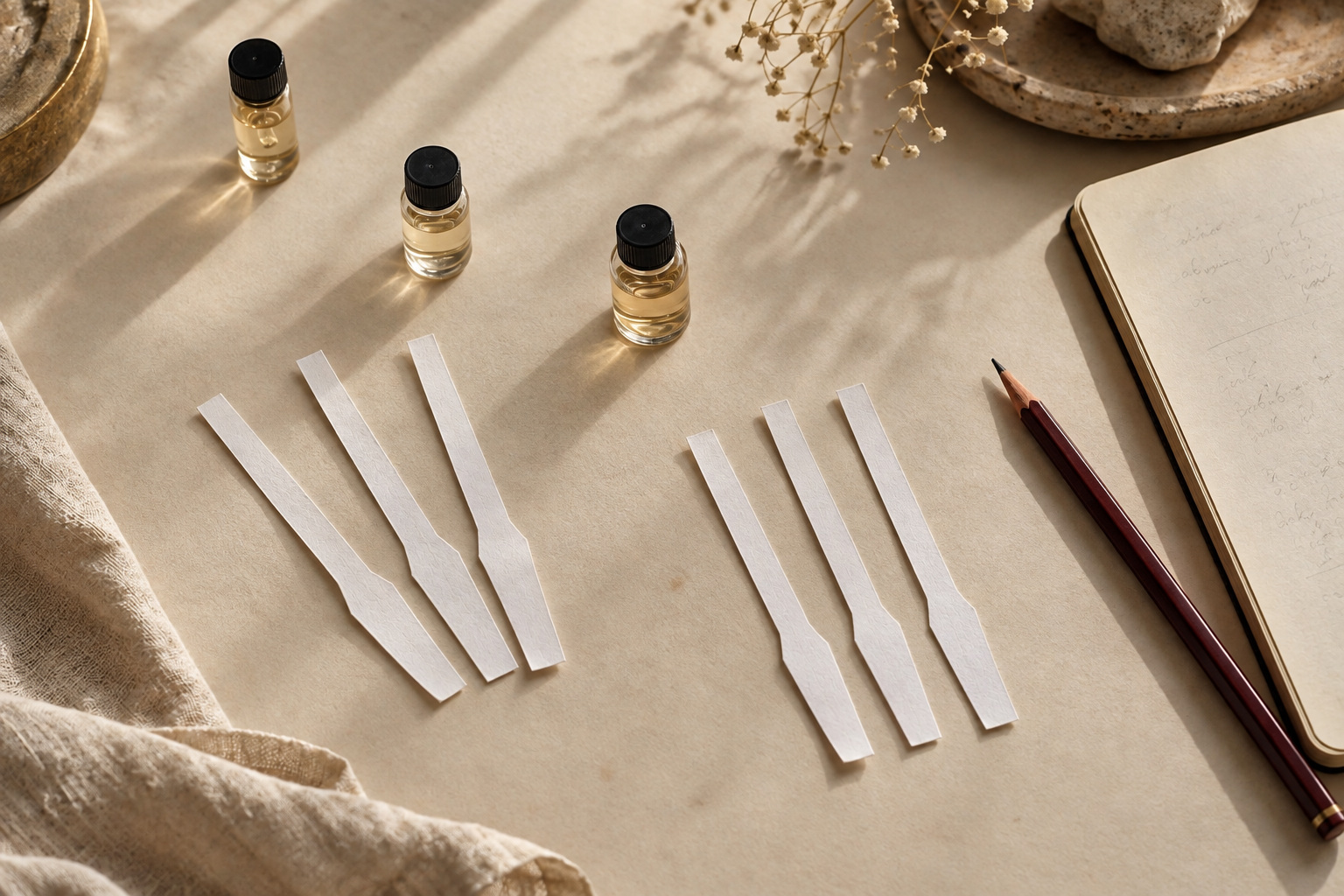
Label each blotter with the sample code. Compare a small selection at a time and keep your notes with the right sample.
Record the opening, then return as it develops. For a wearable fragrance, the later impression matters alongside the first few moments.
Ask both “Do I like it?” and “Does it suit our customer and setting?” A personal favourite isn’t always the strongest fit for a brand.
“Keep the dry wood, reduce the sweetness” is more actionable than “make it more premium.” Agree the most important change with your team.
Tell us what you need beyond a creative direction. These points help establish a clear proposal and avoid assumptions later.
The intended application, number of directions and approach to revisions.
Development fees, expected quantities, timing and any exclusivity requirements.
Who handles the product base, testing, manufacture, packaging and the final deliverables.